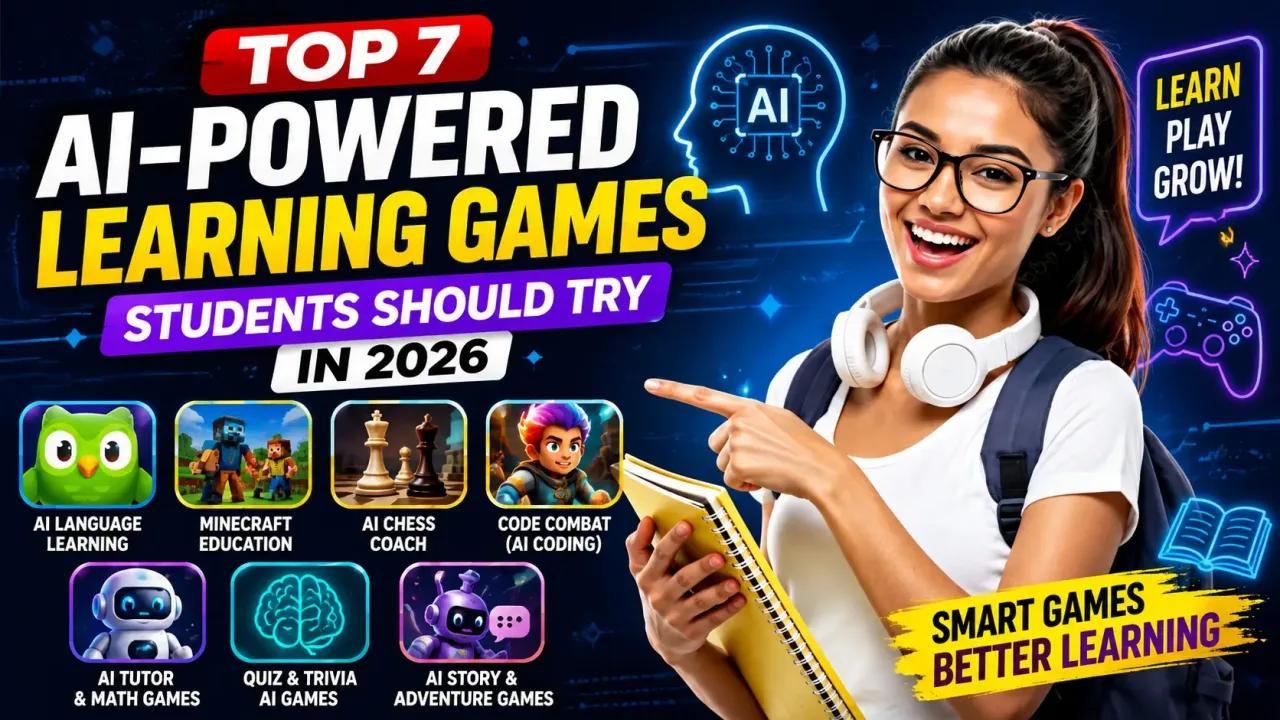
Top 7 AI-Powered Learning Games Students Should Try in 2026
What this article covers
1. Game-Based Learning Revolution: What to Expect#
The evolution of AI in education has transformed traditional learning methods. From early computer-assisted instruction to advanced adaptive learning systems, AI has become a pivotal tool in enhancing educational experiences. As we move towards 2026, the integration of AI in educational games is set to revolutionize how students learn.
Game-based learning plays a crucial role in engaging students. By incorporating elements of competition, collaboration, and storytelling, educational games capture students' attention more effectively than conventional methods. They encourage active participation and facilitate deeper understanding of complex concepts.
AI personalizes learning experiences by analyzing individual student performance and preferences. This allows for tailored feedback and customized challenges, ensuring that each learner progresses at their own pace. As students interact with AI-powered games, the technology adapts to their skills, creating a more effective and enjoyable learning environment.

2. Top AI-Powered Game: Name of Game 1#
Name of Game 1#
Name of Game 1 is an engaging educational platform designed to teach critical thinking and problem-solving skills. It combines immersive storytelling with interactive challenges that adapt to each player's learning pace.
The game utilizes advanced AI algorithms to analyze player responses and adjust the difficulty level in real-time. This personalized experience keeps students motivated and ensures they are always challenged without feeling overwhelmed.
Key features include:
- Adaptive Learning: The AI customizes challenges based on player performance.
- Feedback Mechanism: Instant feedback helps students understand their mistakes and learn effectively.
- Collaborative Play: Students can team up with peers, enhancing social learning and teamwork skills.
Targeting students aged 10-15, Name of Game 1 aims to improve cognitive skills while making learning enjoyable. The expected learning outcomes include enhanced analytical abilities and greater confidence in tackling complex problems.
3. Exploring Game 2: Transformative Learning Through Play#
Overview of Game 2: Transformative Learning Through Play#
Game 2 is designed to immerse students in an interactive environment that promotes critical thinking and problem-solving skills. Players embark on a quest where they face challenges that require both collaboration and creativity, aligning with educational goals.
AI Adaptation to Learning Styles#
The game utilizes advanced AI algorithms to tailor experiences based on individual learning styles. Factors such as pace, difficulty, and content type are adjusted dynamically, ensuring that each student remains engaged and challenged at their personal level.
User Feedback on Effectiveness#
Users have reported significant improvements in comprehension and retention of material. Here are some key points from feedback:
- Engagement: Many students find the game highly engaging, making learning enjoyable.
- Personalization: Players appreciate the tailored experience, noting that it meets their unique learning needs.
- Skill Development: Educators observe enhanced critical thinking and teamwork skills among players.

4. Game 3: Combining Fun and Education Seamlessly#
Core Educational Themes#
Game 3 focuses on critical thinking, creativity, and problem-solving skills. By integrating real-world scenarios, it encourages students to apply their knowledge in practical situations.
AI-Driven Challenges and Rewards#
The game utilizes AI to tailor challenges based on individual learning progress. Students receive customized tasks that adapt to their skill levels, ensuring an engaging experience. As they complete challenges, they unlock rewards that enhance gameplay and provide further learning resources.
Collaborative Features#
Game 3 promotes teamwork through collaborative projects and multiplayer challenges. Students can join forces to solve complex problems, fostering communication and cooperation. This social interaction enhances both learning and retention, making education a collective journey.
5. Future of AI Learning Games: Trends to Watch#
Emerging Trends in AI Learning Games#
- Personalization: AI will enhance the ability to tailor educational content to individual student needs, improving engagement.
- Adaptive Learning: Games will adapt in real-time to student performance, offering challenges that match their skill levels.
- Social Learning: Features that promote collaboration among students will become more prominent, facilitating peer learning.
Predictions for the Future of Educational Gaming#
- Increased integration of virtual and augmented reality, creating immersive learning environments.
- Greater emphasis on soft skills development through role-playing scenarios.
- Enhanced data analytics to track student progress and adapt learning pathways accordingly.
Impact on Student Learning Experiences#
These trends are expected to transform educational gaming into a more engaging and effective learning tool. Students will benefit from tailored experiences that cater to their specific learning styles, fostering deeper understanding and retention of knowledge. Enhanced collaboration features will promote teamwork and communication skills, essential in today's interconnected world.
Frequently asked questions#
What are AI-powered learning games?#
AI-powered learning games are educational games that utilize artificial intelligence to adapt to individual learning styles, enhance engagement, and improve knowledge retention.
How do these games benefit students?#
These games provide personalized learning experiences, increase motivation through interactive challenges, and help develop critical thinking skills in a fun environment.
Are there any costs associated with these games?#
Some AI-powered learning games may have free versions, while others could require a subscription or one-time purchase. It's important to check the pricing details for each game.
Can these games be used in classrooms?#
Yes, many of these games are designed for classroom settings and can be integrated into the curriculum to enhance traditional teaching methods.
What age group are these games suitable for?#
AI-powered learning games are typically designed for a range of age groups, from elementary to high school students, depending on the game's content and objectives.

Read next
Difference Between MBA and PGDM: Degree vs. Diploma Insights
If you've spent even ten minutes scrolling through college forums or talking to seniors about management studies, you've probably run into this exact confusion…

Rs 15L Fees Recovery: 18-Month Analytics MBA vs 2-Year IIMs
Picture this: you've just gotten two admit letters on the same day. One is from a well-known 2-year MBA program at an IIM, fees somewhere north of ₹20…

MBA in HR Jobs & Salary 2026: Key Insights for Success
Ask ten people what an HR department actually does, and at least half of them will say something like "they handle the paperwork" or "that's where you go…

Top 5 In-Demand MBA Specializations in 2026 for High-Paying Jobs
You know that moment when you're filling out an MBA application and you hit the dropdown menu for "specialization," and suddenly your cursor just... hovers there?…
0 comments